
Gustave Sherman: Materials & Methods
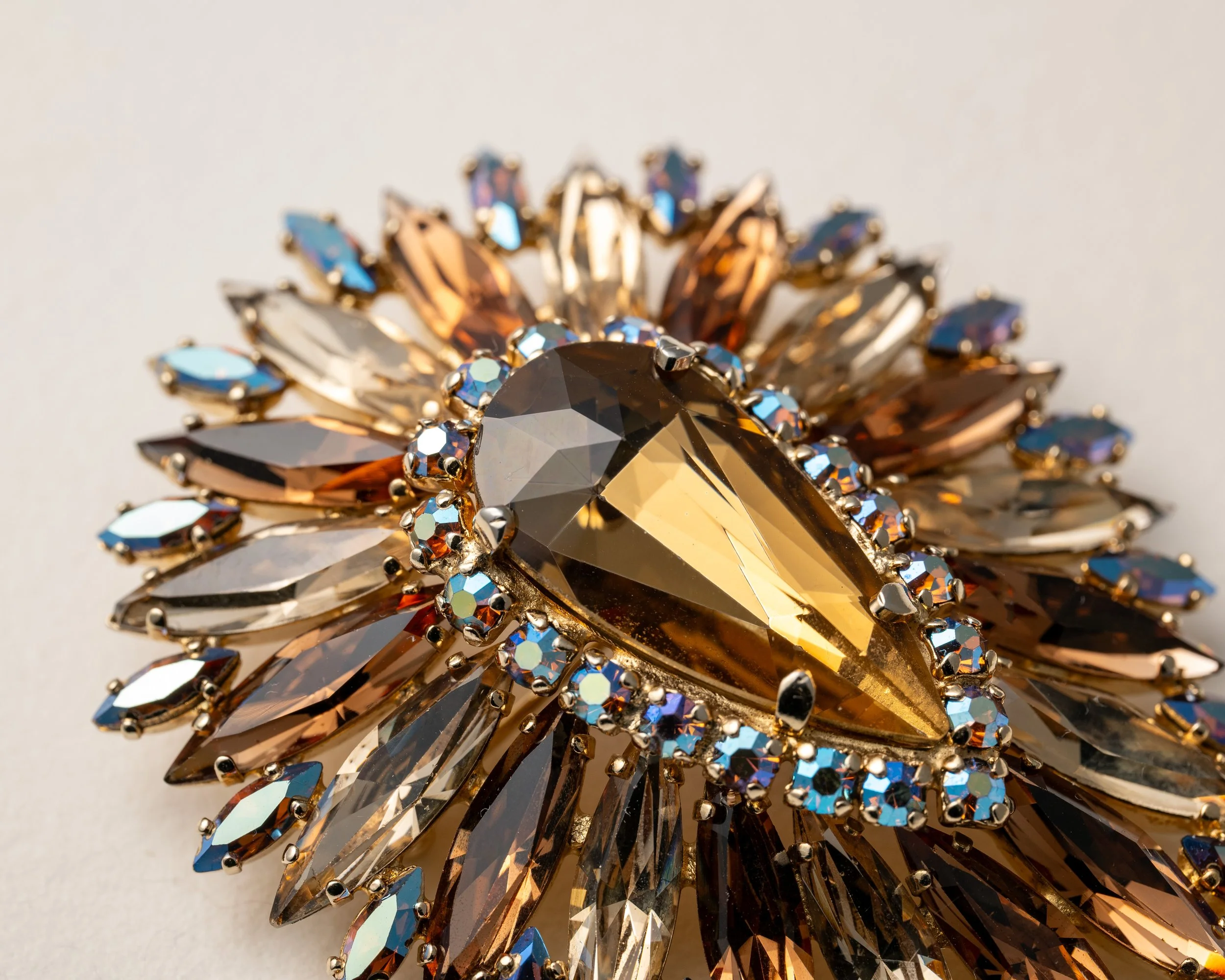
Substantial Gustave Sherman Amber Crystal Brooch, late 1950s–60s
Gustave Sherman (1910–1983) opened his Montreal jewellery house in 1947, trading as G. Sherman & Company Limited, and kept design, production, and distribution under his own hand. By the mid-1950s he was the foremost maker of his kind in Canada - and among the best in the world. His work reached the runways of Paris and New York. Sherman - as you will see in the examples here - had exacting standards for his design house. The Sherman line guarantee was Made to Last a Lifetime: a specification rather than a slogan.
When taste turned to plain metal in the 1970s, he declined to compromise his materials, moved into precious metal as the gold price rose, and closed the company in 1981. His work is now held by the Royal Ontario Museum and the Museum of Fine Arts, Boston.
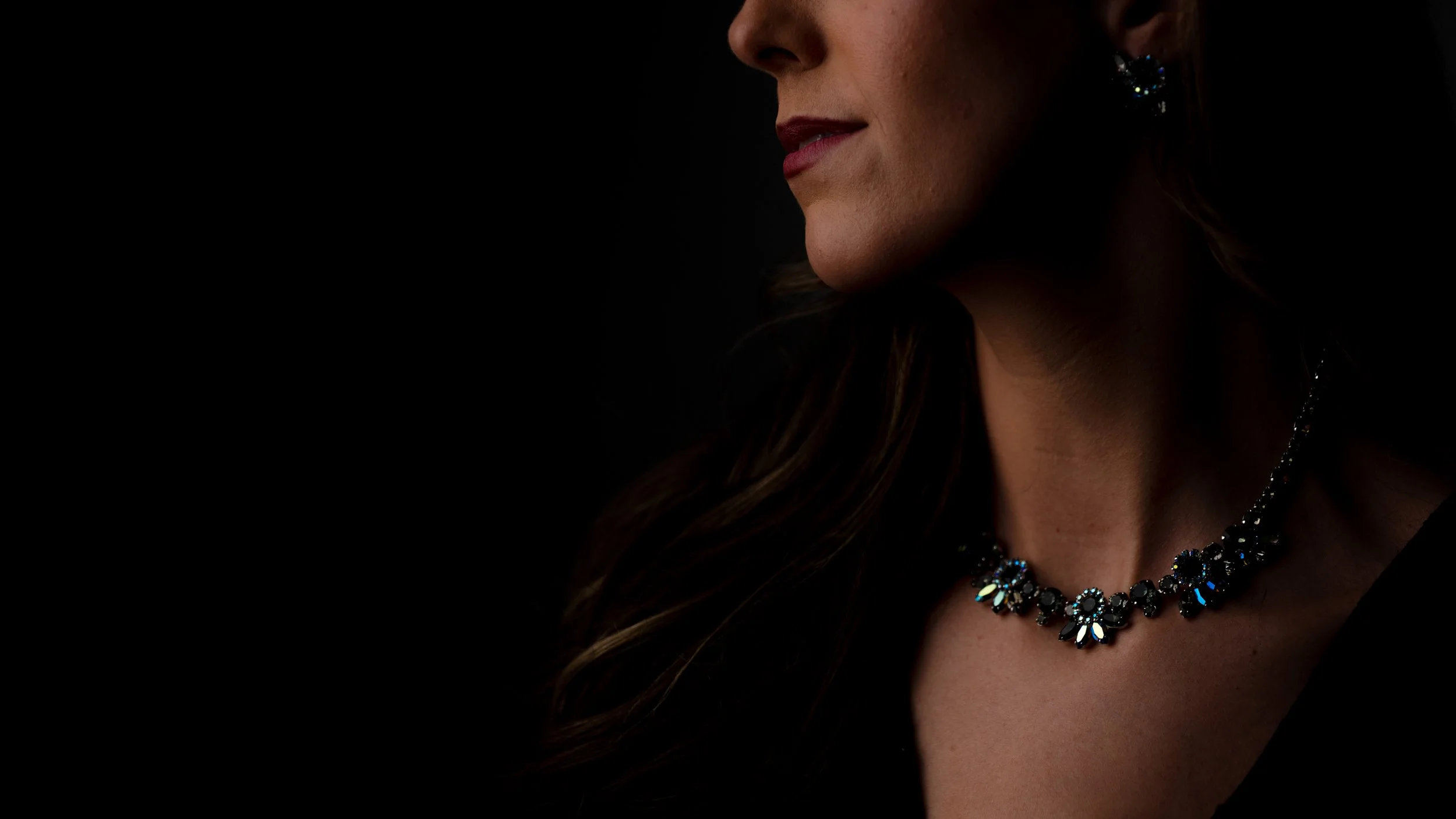
Gustave Sherman Dark Teal and Smoky Grey Parure, 1950s–60s
Materials: Austrian Crystal
Sherman set a single material: Swarovski crystal, cut at Wattens, in the Austrian Tyrol. Its glass carries a refractive index well above that of ordinary glass, so that more light is bent, dispersed into colour, and returned - this is a property of the glass itself rather than of any coating. Machine-faceting, patented by Daniel Swarovski in the 1890s, produced facets meeting at true points, without rounding or trapped air, and stones of a given cut that behave alike; this is what allows a hundred stones to read as one surface.
In 1956, with Christian Dior, Swarovski introduced the Aurora Borealis coating, a fine metallic film casting an iridescent shimmer. Sherman used it with discipline: the peacock-toned aurora bordering the smoke-grey parure are characteristic of the restraint.
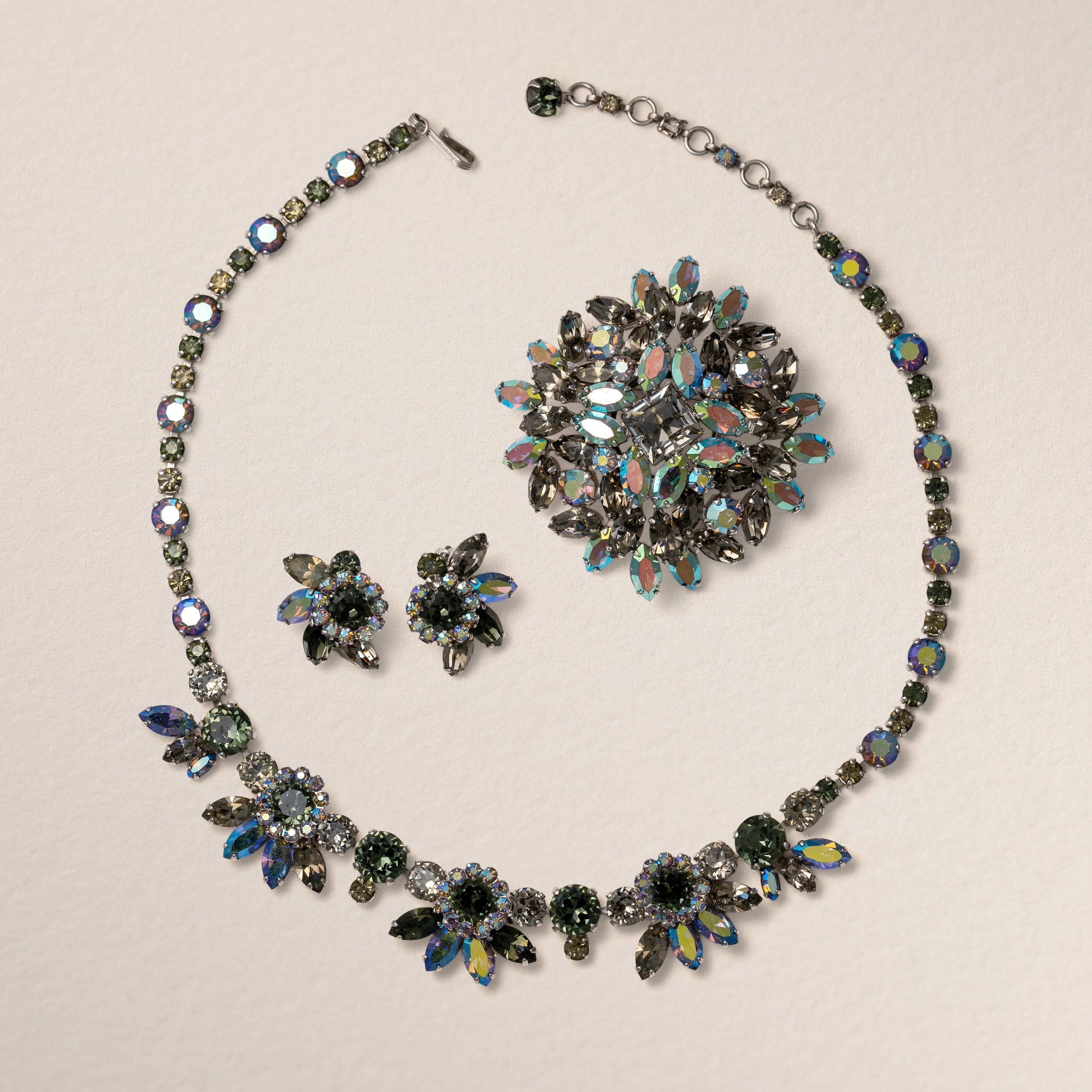
Gustave Sherman Dark Teal and Smoky Grey Parure, 1950s–60s
Markers of Design Quality
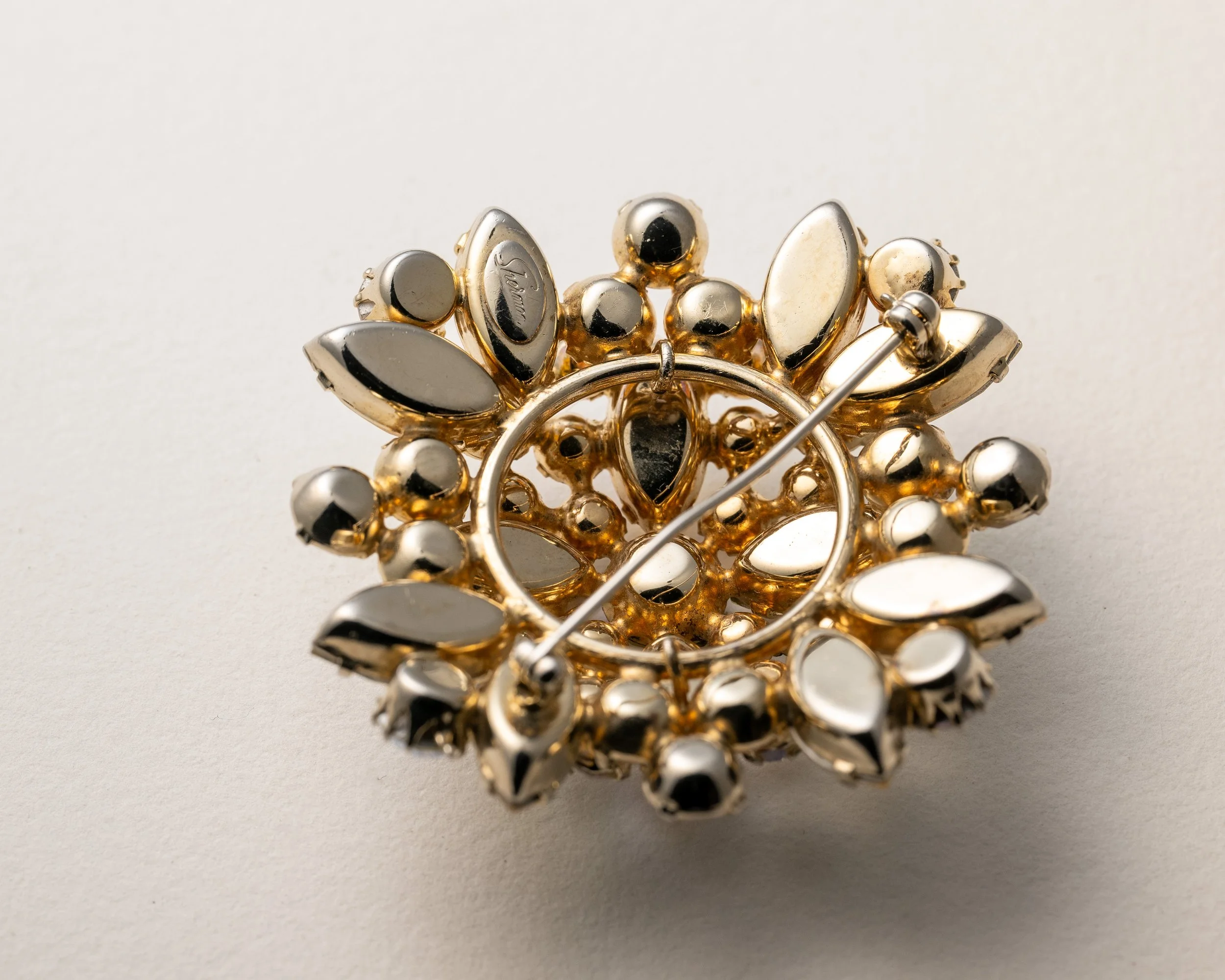
Example of Sherman brooch reverse
Stones were prong-set by hand rather than glued, which holds the crystal securely, admits light from behind, and protects the foil backing; the close-set navettes of the pink feather brooch (see below) are placed this way, stone by stone.
Settings were heavily plated - with rhodium in several layers, or heavy gold. Darkened japanned metal was used occasionally where contrast was wanted, as in this deep red wreath brooch. Rhodium is hard and does not tarnish, and the weight of plating accounts for much of the work's resistance to wear.
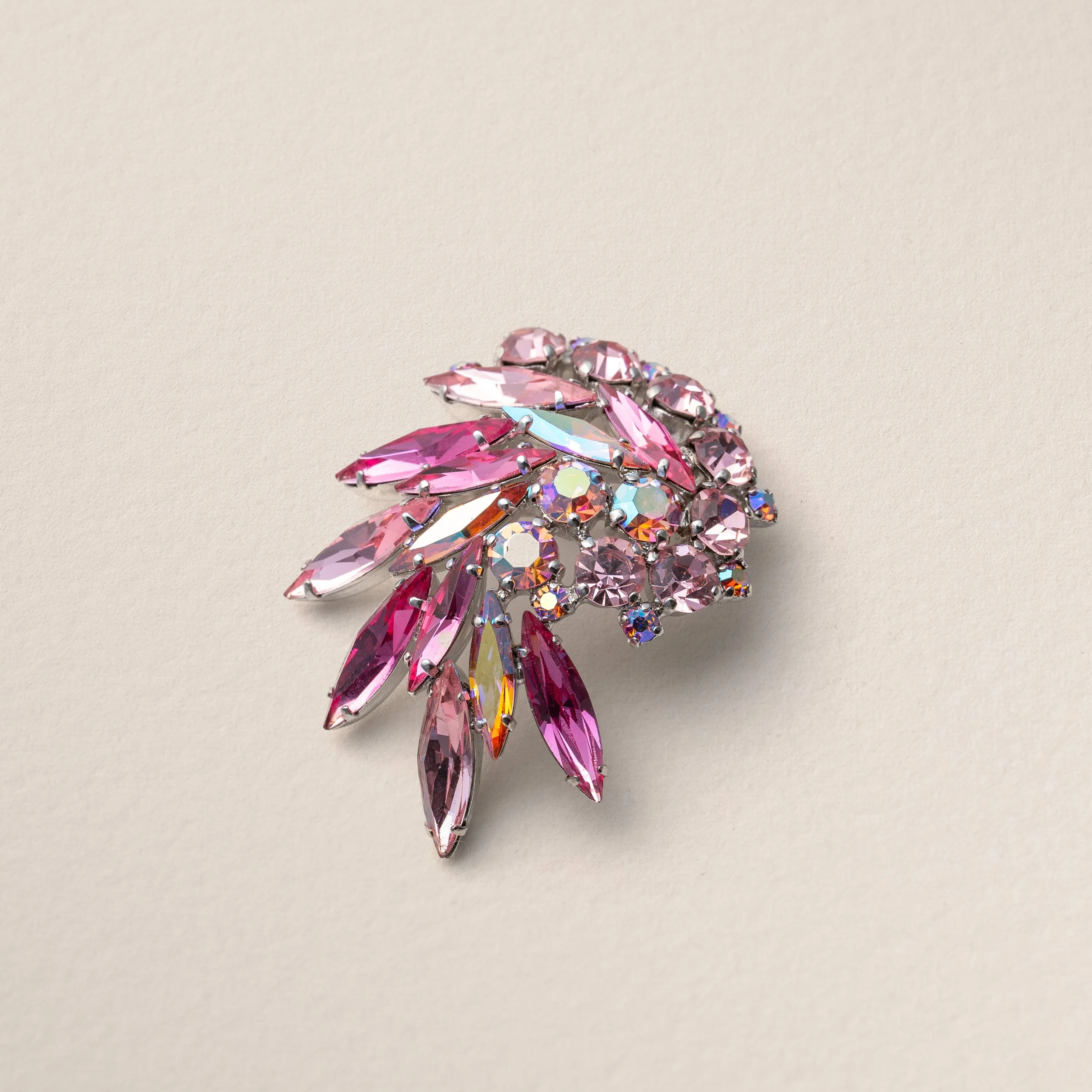
Gustave Sherman Pink and Rose Crystal Brooch, late 1950s–60s
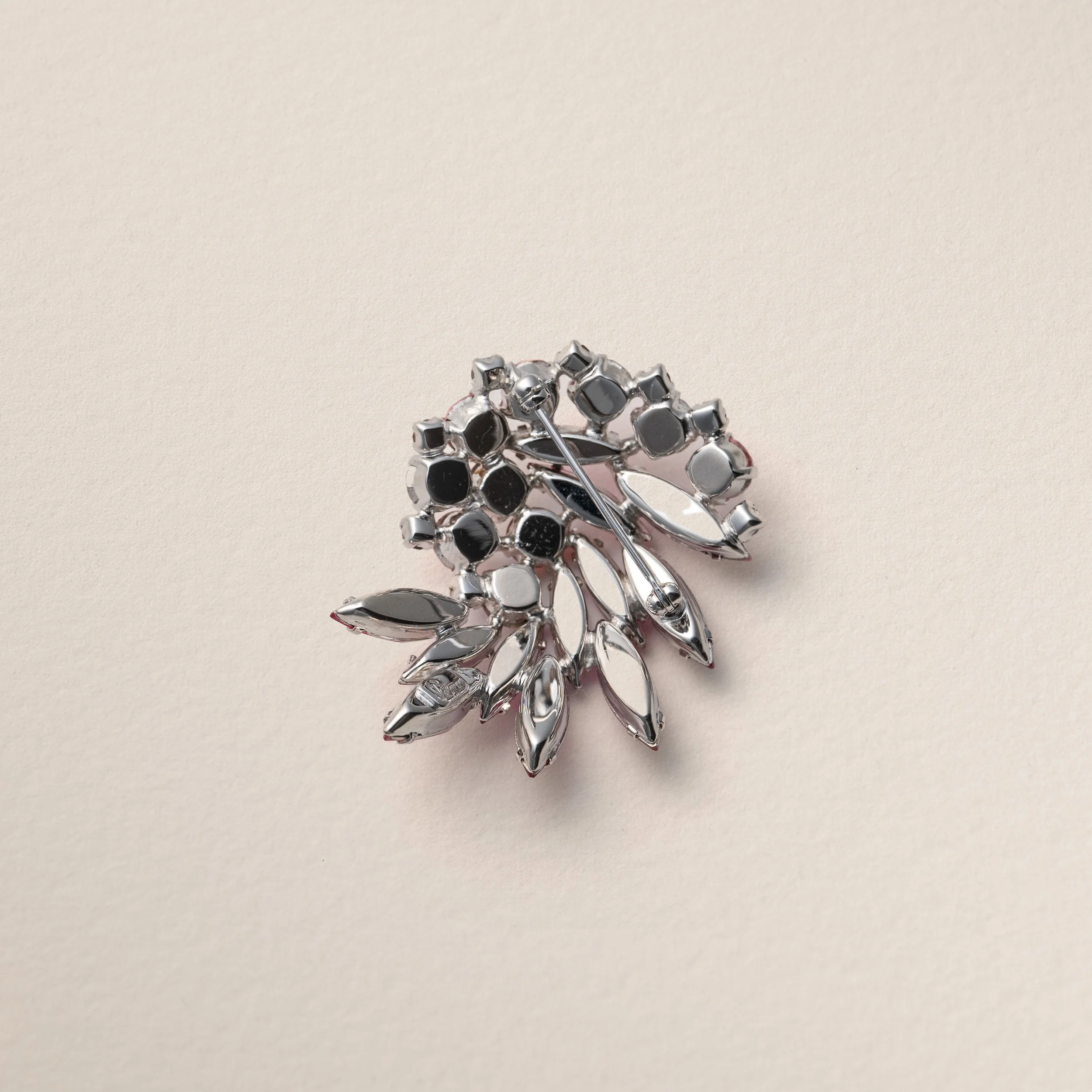
Gustave Sherman Pink and Rose Crystal Brooch, late 1950s–60s (reverse)
What distinguishes Sherman from his abler contemporaries is composition. The stronger pieces are built in depth: stones graduated by size, set on opposing lines, layered so that the surface moves with the wearer. The brooch above, graduated from pale rose to fuchsia, shows the method in miniature; the crystal suite (below) shows the dimensional aspect of Sherman’s design and turns the principle into (visual) movement. The result approaches fine jewellery rather than ornament.
The same decisions account for the work's longevity. Hand setting, repeated plating, and first-quality crystal promote incredible durability. The Sherman pieces in this auction are 70 to 80 years old; they remain sound and still returns light.
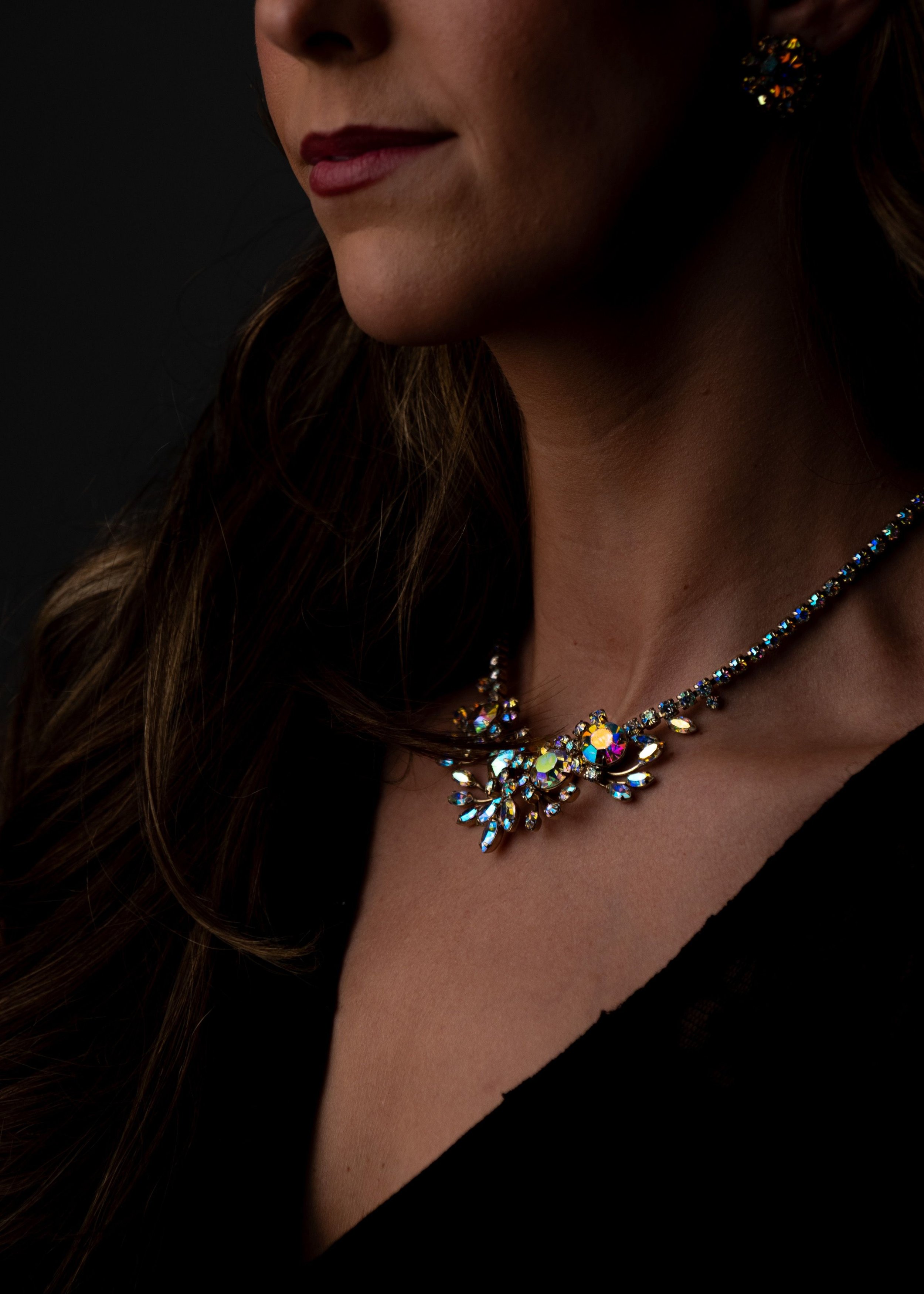
Gustave Sherman Crystal Necklace, Bracelet and Clips Suite, late 1950s–60s
Final Note
Within 20th Century Jewels: Sherman, Boucher, Dior, and the European Ateliers, Sherman is the Canadian anchor, and the thread is material as much as style. The Austrian crystal that gives these pieces their fire is the same crystal, from the same source, that supplied Dior and the houses placed beside him here.
Gustave Sherman is not a provincial adjunct to the European ateliers but a participant in a common enterprise: a Montreal maker who observed their standard, drew upon their material, and, on the evidence of the objects themselves, frequently met it.
Happy Canada Day.