
Working Metonym of a Vanished Trade: David Blackwood's Dipnet (1997)
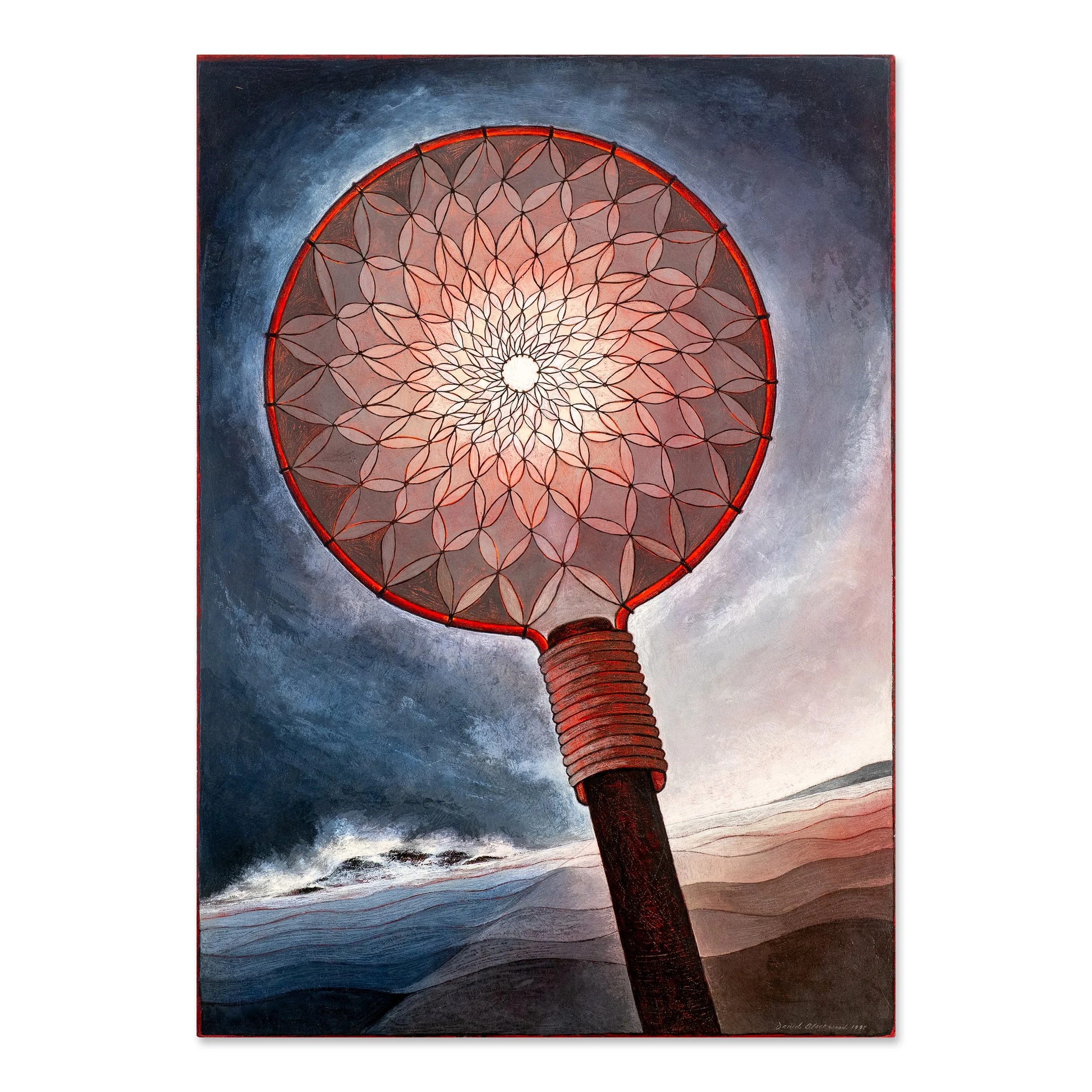
David Blackwood, CM, RCA (Canadian, 1941–2022)
Dipnet, 1997
oil tempera on masonite
38 × 27 in. (96.5 × 68.6 cm)
Literature: David Blackwood, exhibition catalogue, Vancouver: Heffel Gallery Limited, 1998, listed and reproduced as catalogue no. 6
Exhibited: David Blackwood, Heffel Gallery Limited, Vancouver, 28 February – 14 March 1998
Offered in the Jones Auction House 2026 Spring Auction.
“Growing up in Outport Newfoundland during the 1940s and 1950s, I was surrounded by all the essential elements of the traditional Cod Fishery. Both my father’s and mother’s families were deeply involved as fishermen for generations in the Labrador and inshore fisheries. Labrador schooners, sails, cod traps, trap boats, twine lofts, fish stages, fish flakes, cod liver barrels, splitting knives, splitting tables, rubber clothes and rubber boots, were part of everyday life.”
The 2026 Spring Auction includes David Blackwood's oil tempera painting, Dipnet (1997). The work was first exhibited in the artist's solo exhibition David Blackwood at Heffel Gallery Limited, Vancouver (28 February – 14 March 1998), where it appeared as catalogue no. 6, reproduced, with Blackwood in attendance at the opening. It comes to auction from a private Nova Scotia collection.
The implement
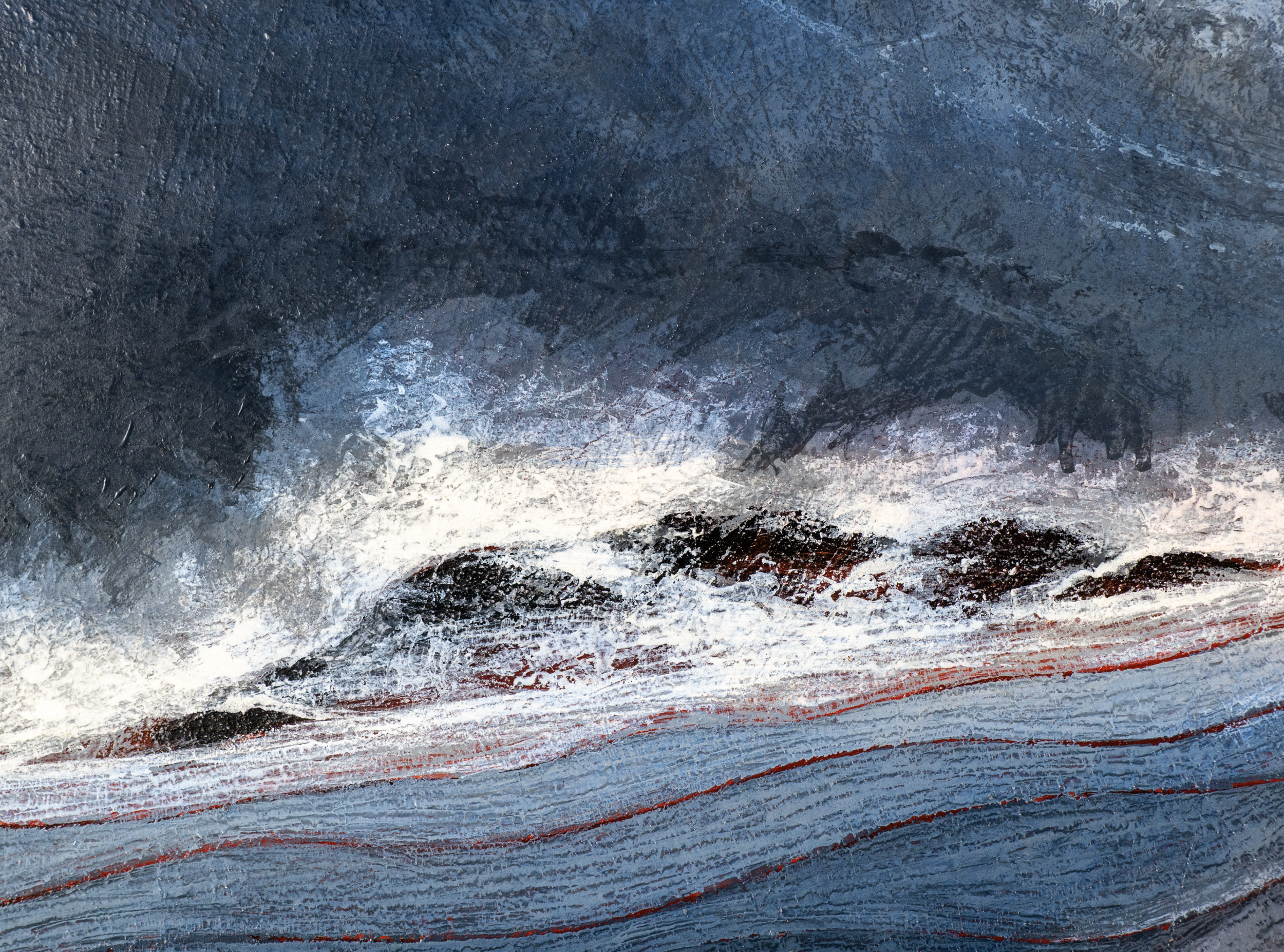
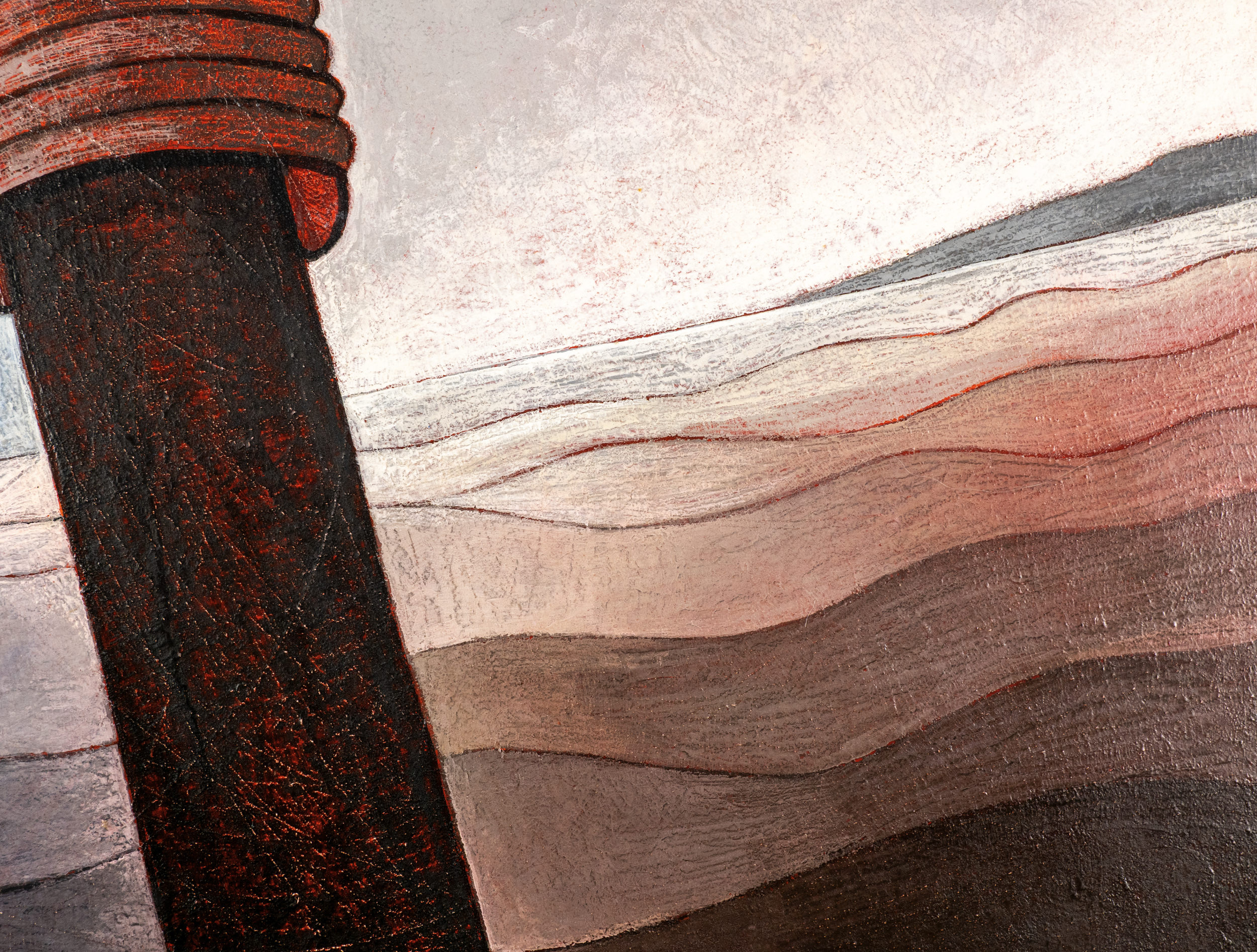
A dipnet is the long-handled mesh tool used to lift cod from traps and weirs into the boat. Blackwood paints it severe and monumental: the woven mesh fills the upper register of the panel as a geometric mandala, each strand patiently rendered, while behind it the landscape divides into two distinct vignettes. Stormy Atlantic to one side; quieter shoreline to the other. The implement is held in suspension above/in between the world it once worked.
David Blackwood, CM, RCA (Canadian, 1941–2022)
Dipnet, 1997 (detail)
David Blackwood, CM, RCA (Canadian, 1941–2022)
Dipnet, 1997 (detail)
The compositional decision matters because of what the object signifies. In 1992, the federal government declared a moratorium on Northern cod, ending nearly five centuries of commercial cod fishing in Newfoundland and Labrador. It is widely described as the largest single-industry layoff in Canadian history — more than 30,000 fishery and plant workers displaced, the population of the province falling roughly ten percent over the following decade as outport communities emptied toward the mainland. Blackwood painted Dipnet in 1997, five years after the moratorium went into effect.
A self-documented series
The cod fishery was the centre of Blackwood's world. He was born in Wesleyville, Bonavista Bay, in 1941, into a family of seafarers — his great-grandfather a captain, his grandfather in command of the S.S. Imogene, his father a sea-captain who fished cod and lobsters from the family schooner Flora S. Nickerson.
The closure of the fishery inflected the work that followed. In an extended artist's statement for his 1995 solo exhibition David Blackwood: Paintings and Related Works on Paper at Heffel Gallery — the exhibition immediately preceding the one in which Dipnet would appear — Blackwood traced the autobiographical arc of his cod fishery paintings explicitly. He had grown up, he wrote, surrounded by every essential element of the traditional cod fishery:
"Growing up in Outport Newfoundland during the 1940s and 1950s, I was surrounded by all the essential elements of the traditional Cod Fishery… Labrador schooners, sails, cod traps, trap boats, twine lofts, fish stages, fish flakes, cod liver barrels, splitting knives, splitting tables, rubber clothes and rubber boots, were part of everyday life." — David Blackwood, August 1995
Blackwood dated the first work in the series — produced, by his own account, in response to the demise of the fishery — to 1990: the etching For Ishmael Tiller; The Ledgy Rocks. He traced its continuation through a sequence of works, predominantly etchings, including Granda Glover on Bragg's Island (1991), Notes from Bragg's Island (1992), Folded Studies (1993), Master Mariner (1994), and Wesleyville Fleet in the Labrador Sea (1995). Alongside the print series, Blackwood developed a parallel body of oil tempera paintings on the same subjects, exhibited for the first time in 1993. The 1995 Heffel exhibition's cover image was the monumental oil tempera triptych Gadus Morhua (North Atlantic Cod), on three panels measuring 78 × 48 in. (198 × 122 cm) overall, whose central panel renders the same dipnet iconography Blackwood would develop further in the present painting two years later. A second closely related oil tempera, Cod Trap, Bragg's Island (36 × 48 in., 1995), was exhibited alongside Dipnet in the 1998 show.
The technique
David Blackwood, CM, RCA (Canadian, 1941–2022)
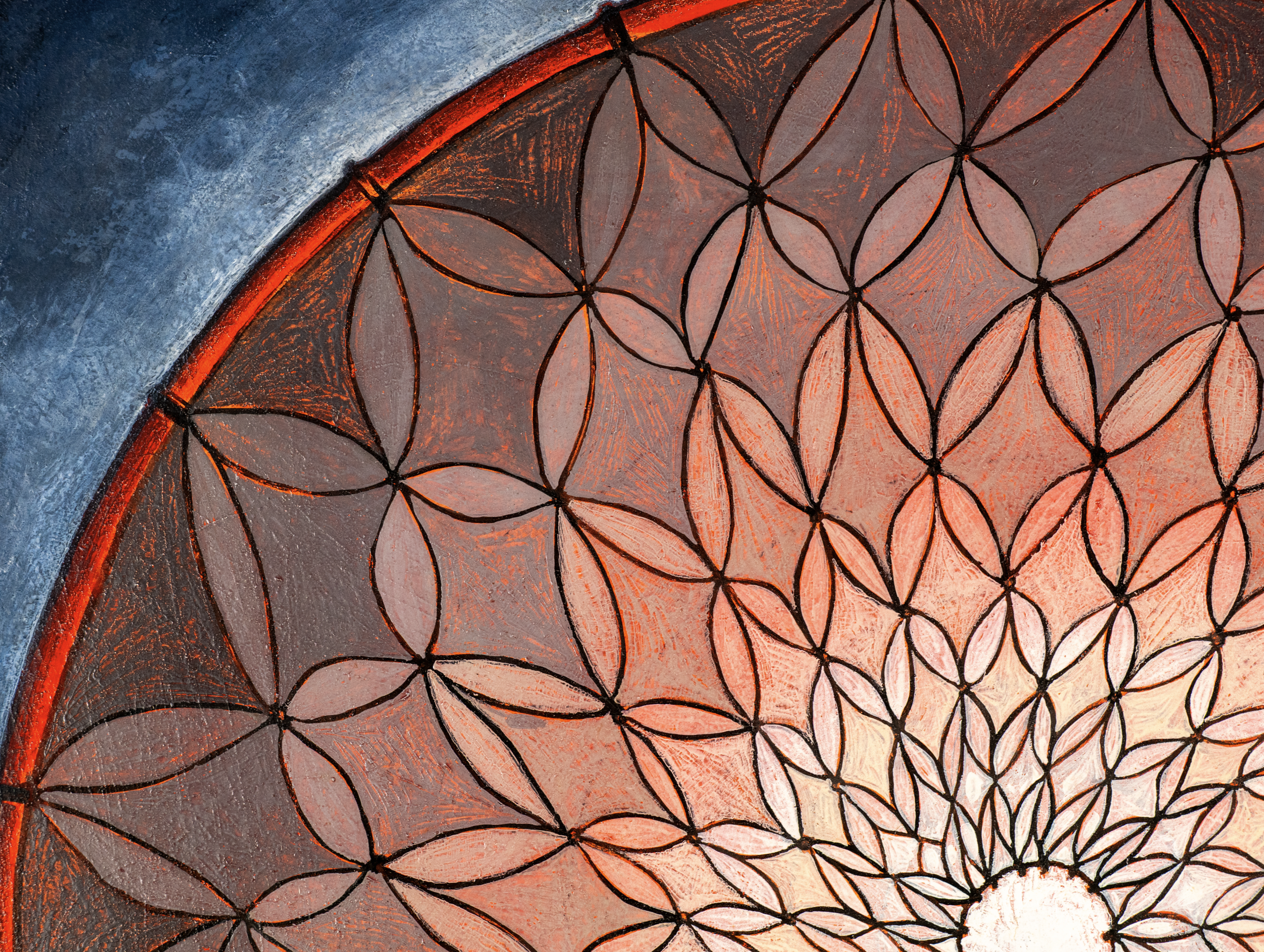
Dipnet, 1997 (detail)
“It seemed the ideal medium for conveying the simple and timeless roughness which I associated with the cod fish culture as I knew it on the North East Coast of Newfoundland. […] The process employs powdered pigments suspended in an egg and oil emulsion. The underpainting is built up in a mono-chromatic grey scale using a series of painting knives. Colour is achieved with successive oil glazes. The end result is a transparent and reflective light quality uncharacteristic of opaque oil painting.”
In the same 1995 statement, Blackwood addressed his choice of oil tempera — the medium of the present work — as a deliberate one.
That description sits well alongside Dipnet. The mesh of the net has a translucent inwardness — colour built through glazing rather than laid down — that thicker oil could not have produced.
The artist
David Blackwood (1941–2022) is among the most distinguished Canadian printmakers of his generation. Born in the outport community of Wesleyville, Newfoundland, he studied at the Ontario College of Art and taught at Trinity College School, Port Hope, from 1963. Appointed to the Order of Canada (1993) and the Order of Ontario (2002), and named Honorary Chairman of the Art Gallery of Ontario in 2003, his work is held in the AGO, the National Gallery of Canada, the Uffizi, and the Royal Collection. A major AGO retrospective of his work was mounted in 2025.
Provenance and documentation
Dipnet is documented in the 1998 Heffel Gallery exhibition catalogue (Vancouver: Heffel Gallery Limited, ISBN 0-9683296-1-6), listed and reproduced as catalogue no. 6. Both the 1995 and 1998 Heffel exhibition catalogues are held in the institutional collection of Artexte (Montreal), the principal Canadian documentation centre for contemporary visual arts.
Full lot details, condition report, and estimate follow in the individual catalogue entry.